Need Fast, Reliable Appliance & Heating Repair?
Don’t let broken ovens, ranges, or heating elements disrupt your household. Our Peachtree Corners technicians arrive fully equipped to diagnose and repair your appliances right away.
Appliance Not Heating - Diagnosis & Solutions
Expert diagnosis and repair for heating failures in dryers, ovens, ranges, cooktops, and dishwashers throughout Peachtree Corners and Gwinnett County.
Common Heating Failures We Troubleshoot:
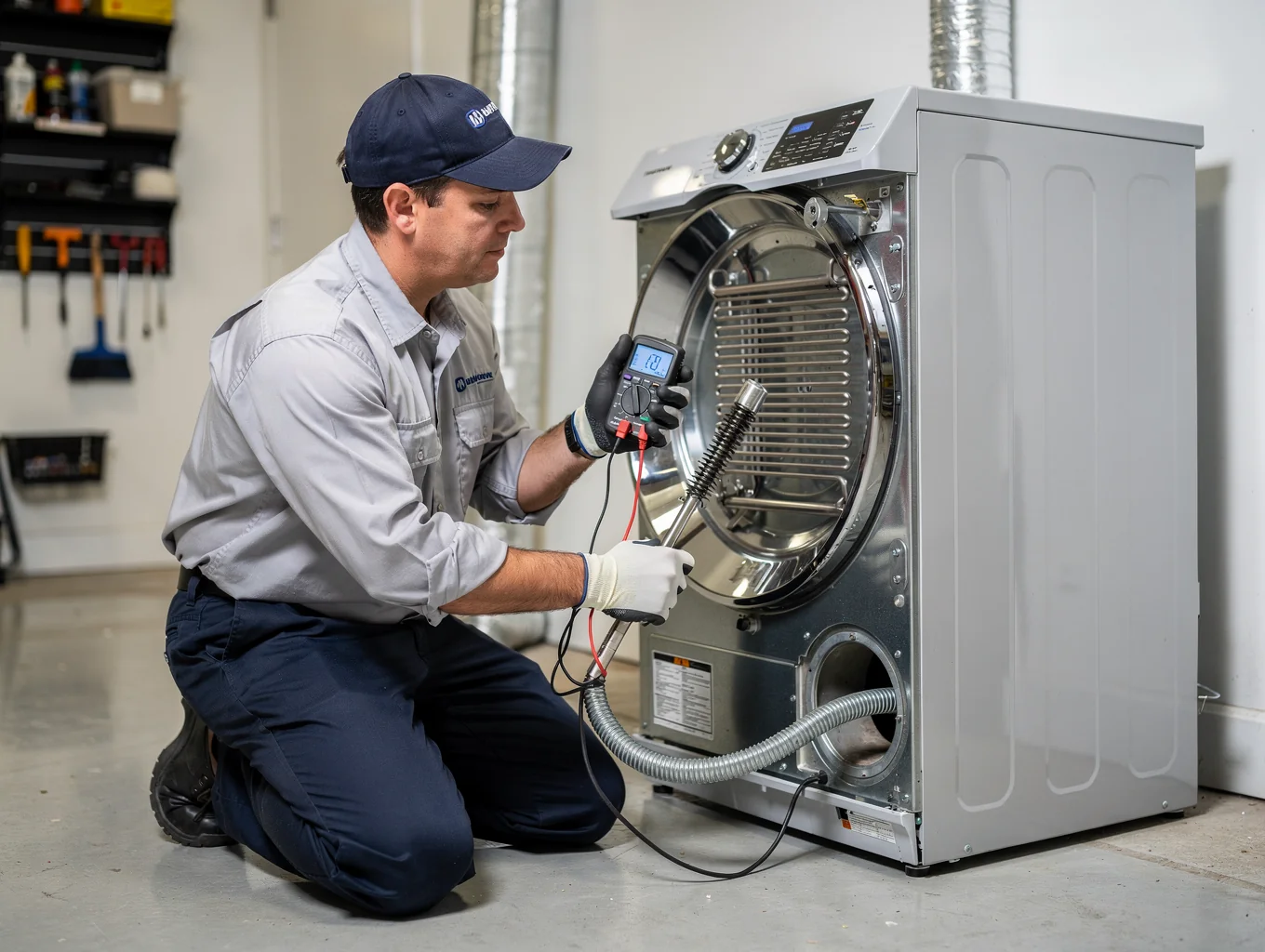
Thermal testing, burner igniters, thermostats, and control boards inspected safely.
Accurate Heating Troubleshooting
Isolate blown thermal fuses, bad relays, or burned elements before replacing parts.
Gas & Electric Systems Covered
Complete testing for major brands including GE, Whirlpool, Samsung, and Bosch.
Why Isn't Your Appliance Heating?
From faulty elements to tripped thermal fuses, explore common heating failure causes across ovens, dryers, cooktops, and dishwashers with transparent local repair cost ranges.
Quick First Steps Before Booking
Try these safe preliminary checks before requesting professional technician dispatch in Peachtree Corners:
Check Both Breaker Switches
Ovens and electric dryers use double-pole breakers. Flip both fully off and back on to restore full 240V.
Inspect Airflow & Lint Ducts
Over 60% of dryer heating failures occur due to blocked lint vents tripping non-resettable thermal safety cutoffs.
Review Error Codes
Modern digital appliances display error codes like F30, F3, or E1 indicating open sensor loops.
Electrical heating coils or bake/broil elements break or burn through after repeated thermal stress cycles, completely halting heat generation.
A safety device designed to break the circuit if the unit overheats (often due to clogged dryer vents or poor airflow) to prevent house fires.
The sensor probe fails to transmit accurate resistance data to the control board, misreading temperatures as hot when the chamber is cold.
In gas units, glow-bar igniters must draw specific amperage to safely open the bi-metal gas safety valve. A weak igniter fails to trigger the valve.
The primary control board relay contacts fail to send 240V high-voltage power downstream to the heating circuit, even if settings are correct.
Heavy appliances require dual 120V legs (240V total). A tripped half-breaker allows 120V lights and drum motors to run while the heating circuit has 0V.
Step-by-Step Appliance Troubleshooting Guide
Follow our diagnostic steps to narrow down what is causing your appliance issue. Learn what you can safely check yourself and when it is time to call a licensed technician in Peachtree Corners.
Refrigerator Diagnostic Steps
Not cooling, leaking water, or strange humming noises
Check Power & Thermostat Settings
Confirm the interior light turns on and the thermostat is set between 37°F and 40°F (0°F for freezer). Verify the breaker is not tripped.
Inspect Condenser Coils & Air Vents
Pull the unit out and check if condenser coils under or behind the fridge are caked with dust or pet hair. Ensure interior vents are not blocked by food packages.
Examine Door Gaskets & Seals
Place a dollar bill in the door and close it; if it slides out freely without resistance, the door seal is leaking warm air into the cabinet.
Listen to the Compressor & Fan
Check if the compressor clicks every few minutes without starting, or if the evaporator fan inside the freezer is squeaking or stopped.
Cleaning coils, replacing door gaskets, setting temperatures, clearing drain tubes.
Compressor clicking without starting, sealed system refrigerant leaks, ice maker water line valve failure, or burning electrical smell.
- Same-day and next-day emergency scheduling
- Upfront diagnostic quote before any work begins
- 90-day parts and labor warranty on all repairs
Need Immediate Diagnosis?
Call our Peachtree Corners dispatch team directly to speak with an appliance repair specialist.
When to Stop and Call a Professional
Never attempt advanced DIY repairs involving high-voltage capacitors, refrigerant lines, or gas connections. Stop troubleshooting if you observe any of the following:
Smell of Natural Gas or Propane
Evacuate the house immediately, do not turn light switches on or off, and call your gas utility or 911 from outside.
Electrical Sparking or Burning Plastic Odor
Shut off the dedicated breaker at the main electrical panel right away to prevent short-circuit fires.
Uncontrolled Water Flooding
Turn off the shut-off valve behind the appliance or shut the main water supply to protect floors and drywall.
Internal Grinding, Smoke, or Error Lockouts
Do not repeatedly force-start an appliance with motor seizures or control board lockouts; this can burn out secondary circuits.