Restore Your Washer to Quiet, Smooth Spinning
Stuck with soaking-wet clothes, violent vibrations, or an unbalanced drum? Our licensed technicians accurately diagnose drive belts, motor couplers, and control boards in Peachtree Corners.
Same-Day & Next-Day Availability
Prompt diagnostic appointments across Peachtree Corners and Gwinnett County.
Upfront Transparent Pricing
Fixed repair quotes before work begins, with no unexpected hidden fees.
90-Day Parts & Labor Warranty
Factory-grade replacement parts backed by our full service guarantee.
Washer Not Spinning – Diagnosis & Solutions
Expert diagnosis and repair for spinning failures. From worn drive belts and lid switches to drain clogs and motor couplings, we restore full cycle performance fast.
Top-Load & Front-Load
Certified for all major brands
OEM Replacement Parts
Direct factory spec belts & switches
Precise Diagnostics
Full error code & drive testing
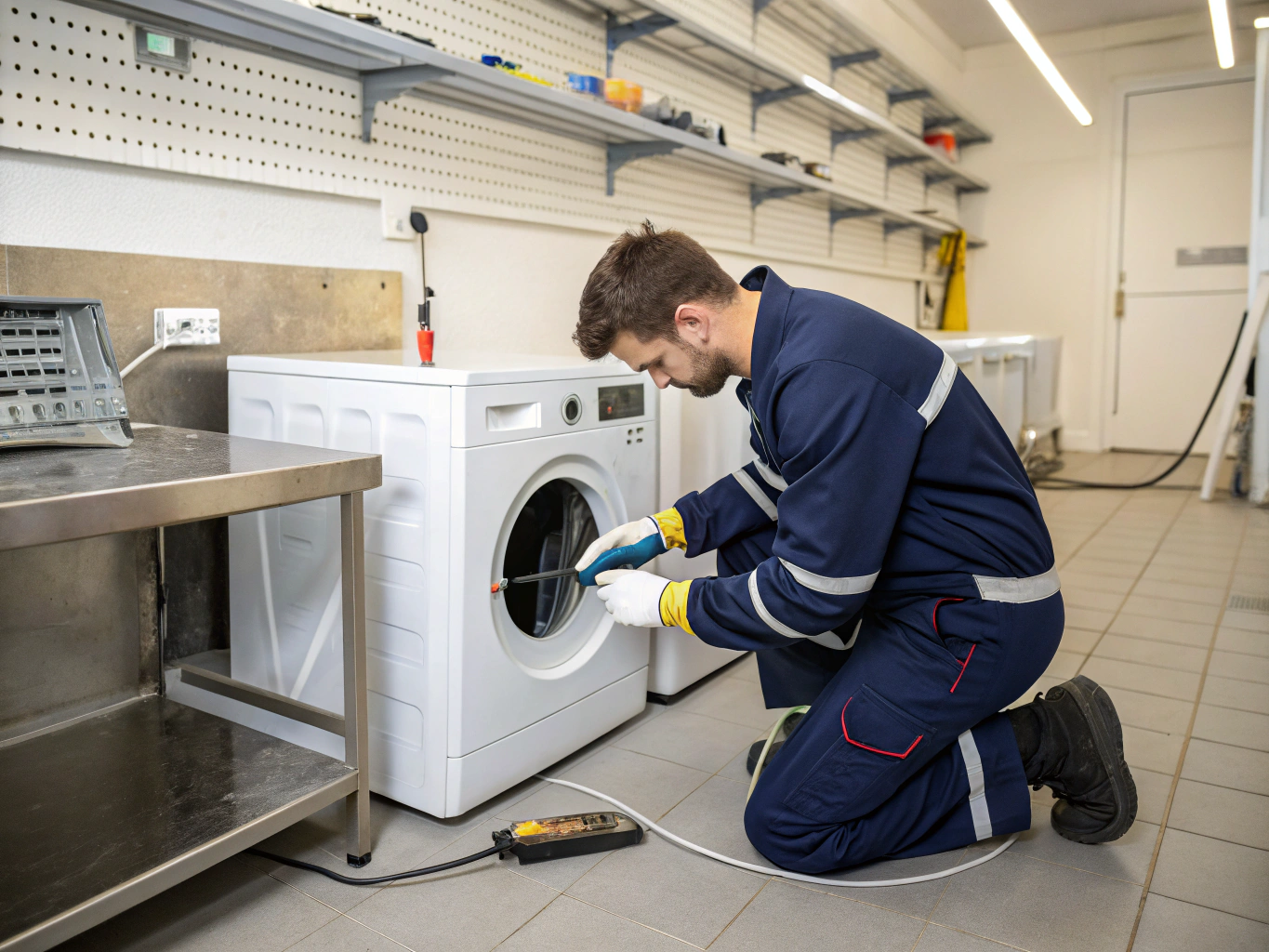
Common Causes for Spin Failure
TroubleshootingBroken Drive Belt
Slipped, stretched, or snapped drive belt
Faulty Lid Switch / Door Lock
Safety latch fails to signal motor engagement
Drain Pump Blockage
Washer will not enter spin cycle with standing water
Motor Coupling or Stator Failure
Direct-drive motor or clutch assembly worn out
Why Your Washing Machine Won't Spin
When clothes come out soaking wet or your washer stops before the spin cycle, one of these core mechanical or electrical components is typically the culprit. Review realistic diagnosis costs and key symptoms below.
Washer fills and agitates but pauses or clicks before spin cycle
Top-loaders rely on a mechanical lid switch and front-loaders use an electronic strike lock to ensure safe high-speed spinning. A defective lock immediately halts rotation.
Motor hums audibly during drain/spin, but the wash drum remains stationary
The belt transfers rotational torque from the drive motor to the spin basket pulley. Over time, belts crack, stretch, slip off track, or snap under heavy imbalance loads.
Extremely loud jet-engine roar or metal grinding during spin cycles
When internal water seals fail, soapy water leaks into the precision steel bearings, washing out grease and causing severe rust, friction, and eventual drum lockup.
Drum doesn't turn in any cycle, accompanied by electrical burning smells
Direct-drive stators, standard split-phase motors, or inverter control boards can burn out, short-circuit, or suffer damaged internal copper windings.
Agitator or drum won't spin under load; motor runs with quiet clicking
Direct-drive top loaders use a rubber and plastic coupler between motor and transmission. When an overloaded tub jams, this piece shears intentionally to save the motor.
Drum holds standing water and stops before high-speed spin cycle
Modern washers will not initiate spin if the water level sensor detects standing water. Small coins, socks, or debris jammed in the pump impellers block drainage.
Not sure which component is stalling your washer?
Our technicians carry OEM switches, belts, pumps, and motors in stock on service vans across Peachtree Corners and Gwinnett County for prompt same-day diagnosis.
Check Load Balance
A single heavy towel or blanket can trip the off-balance sensor and halt high-speed spin routines.
Inspect Drain Function
If water stays in the drum, the spin cycle will not initiate to protect the machine from water spillover.
Listen for Motor Hum
A humming motor with a static basket points straight to a broken drive belt, coupler, or seized bearing.
Step-by-Step Appliance Troubleshooting Guide
Follow our proven diagnostic checklist to resolve simple appliance problems at home, and learn exactly when it is time to call our licensed technicians in Peachtree Corners.
Refrigerator Diagnostic Process
Check Power & Temperature Controls
Ensure the unit is plugged firmly into a grounded 120V outlet. Verify digital or manual temperature thermostats are set to recommended levels (37°F for fresh food, 0°F for freezer).
Inspect Condenser Coils & Air Vents
Dust and pet hair on rear or bottom coils force compressors to overheat. Ensure internal vents between the freezer and fridge compartment are not blocked by bulky grocery containers.
Examine Door Gaskets & Seals
Close a dollar bill in the door gasket. If it slides out with no resistance, warm humid air is leaking in, leading to heavy frost buildup, warm interior temperatures, or continuous running.
Clear Defrost Drain & Ice Maker Lines
Inspect the drain pan underneath and clear the internal drain hole if water pools under the crisper drawers. Ensure water supply valves are open for the ice maker.
Safe DIY Rule
Always disconnect electrical power and shut off water supply lines before opening any access panels or handling interior appliance components.
When to Call a Professional Immediately
Certain appliance problems pose significant fire, electrical, or structural risks. Do not attempt DIY repairs in these critical scenarios.
Shut off the gas supply line immediately, avoid flipping electrical switches, evacuate the area, and contact emergency services or a certified gas technician.
Turn off the relevant circuit breaker right away. Scorched wiring, blown relays, or arcing elements pose an active fire hazard and require professional diagnostic tools.
Shut off the main water valve to prevent structural damage, floor warping, or mold growth beneath kitchen or laundry room subfloors.
EPA regulations require certified technicians to handle refrigerant leaks, compressor replacements, and system recharging safely.